Introduction
Raw feeding is powerful—but only when done correctly. Many Australian dog owners make mistakes that can impact their dog’s health.
1. Feeding Unbalanced Diets
One of the most common raw feeding mistakes in Australia is providing an unbalanced diet. Many dog owners assume that feeding raw meat alone is enough, but this can lead to serious nutritional deficiencies over time.
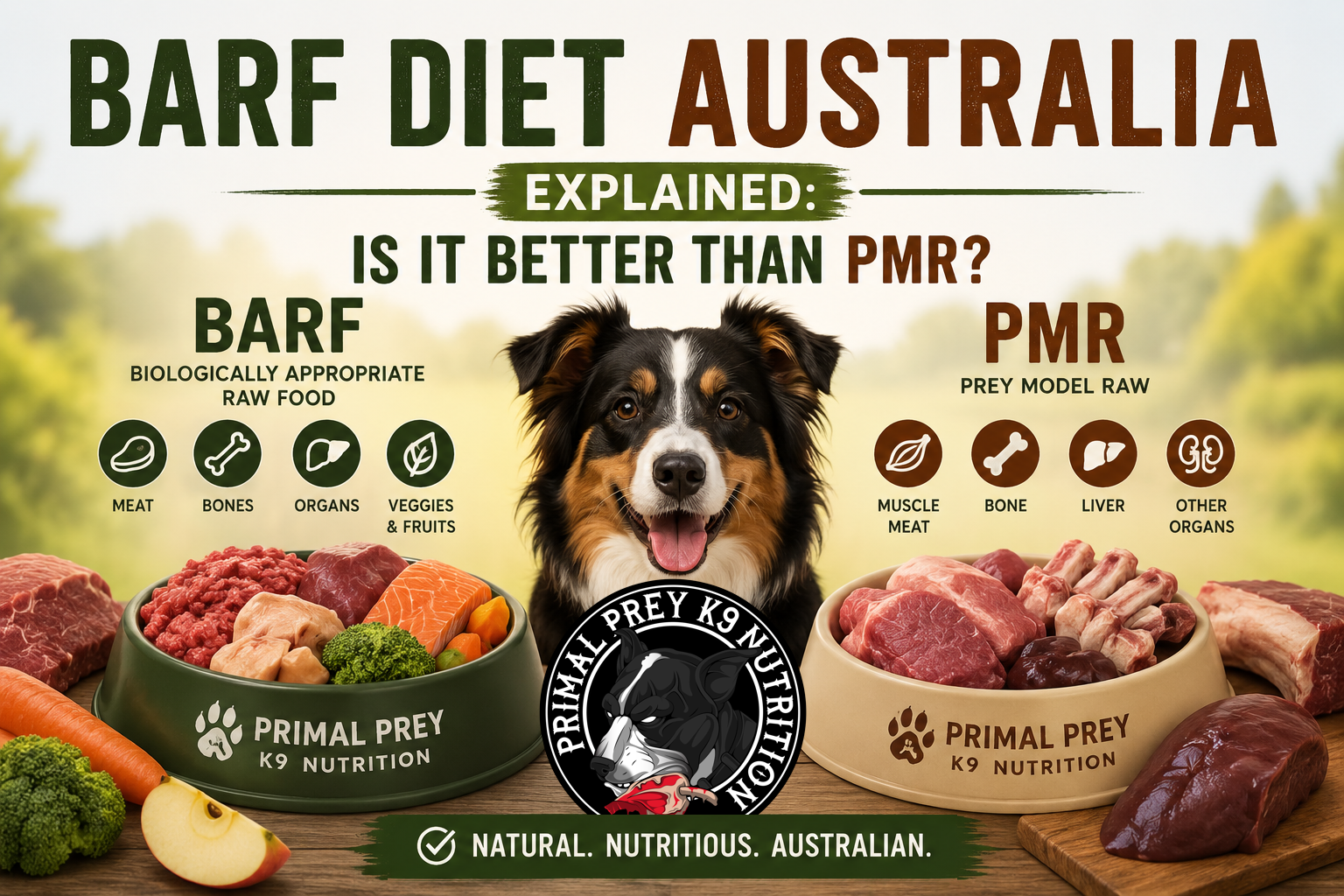
A proper raw diet must include the right ratio of:
- Muscle meat (protein and energy)
- Raw edible bones (calcium and phosphorus)
- Organ meats (essential vitamins and minerals)
Without this balance, dogs may develop issues such as कमजोर bones, poor coat condition, and weakened immunity. For example, too much muscle meat without bone can cause calcium deficiency, especially in growing puppies.
To avoid this, Australian dog owners should follow a structured feeding model or choose pre-balanced meals from trusted providers like Primal Prey K9 Nutrition.
2. Ignoring Food Safety
Australia’s warm climate makes food safety a critical concern when feeding raw dog food. Improper handling or storage can quickly lead to bacterial growth and spoilage.
Common mistakes include:
- Leaving raw food out too long in hot weather
- Thawing food at room temperature
- Refreezing thawed meals
Raw dog food should always be:
- Stored frozen until needed
- Thawed in the refrigerator
- Consumed within 24–48 hours
In hotter regions, food should not be left out for more than 15–20 minutes. Ignoring these precautions can put your dog at risk of digestive upset or illness.
3. Not Feeding Enough Variety
Another major mistake is feeding the same protein source every day. While dogs can tolerate repetition better than humans, they still need a variety of nutrients to stay healthy.
Different protein sources provide different benefits:
- Beef: rich in iron and zinc
- Chicken: high in protein and affordable
- Lamb: great for energy and healthy fats
- Fish: excellent source of omega-3 fatty acids
Feeding only one type of protein over time can lead to nutritional gaps. Rotating between multiple protein sources helps ensure a more complete and balanced diet.
For best results, aim to rotate proteins weekly or include mixed-protein meals.
4. Switching Too Quickly
Transitioning to a raw diet too fast is a common issue, especially for dogs previously fed kibble. A sudden switch can overwhelm the digestive system and lead to symptoms such as:
- Diarrhea
- Vomiting
- Loss of appetite
Dogs need time to adjust to raw food because it is digested differently than processed kibble.
A gradual transition is recommended:
- Day 1–3: 25% raw, 75% old food
- Day 4–6: 50% raw, 50% old food
- Day 7–9: 75% raw, 25% old food
- Day 10+: 100% raw
This slow approach allows your dog’s gut to adapt and reduces the risk of digestive upset.
5. Choosing Low-Quality Products
Not all raw dog food products in Australia are created equal. Choosing low-quality or poorly formulated products can do more harm than good.
Some low-quality raw foods may:
- Lack proper nutritional balance
- Use low-grade meat or fillers
- Be improperly handled or stored
High-quality raw dog food should be:
- Made from human-grade, Australian-sourced ingredients
- Properly balanced with meat, bone, and organs
- Prepared and frozen under strict safety standards
Trusted providers like Primal Prey K9 Nutrition focus on delivering complete and balanced meals, ensuring your dog receives optimal nutrition without the guesswork.
Why Balance Matters
Professionally prepared raw food ensures:
- Correct nutrient ratios
- Safe handling
- Consistent quality
Conclusion
Avoiding these common raw feeding mistakes in Australia will help your dog thrive on a natural, healthy diet.