Choosing the right raw diet for your dog can feel overwhelming, especially when you encounter terms like BARF and PMR. Both feeding methods have passionate supporters, and both aim to provide dogs with a biologically appropriate diet rather than highly processed kibble.
But what exactly is the difference? More importantly, which approach is better for Australian dogs?
In this guide, we’ll explain everything you need to know about the BARF Diet Australia pet owners often discuss, compare it with the PMR diet, and help you decide which feeding philosophy aligns with your dog’s nutritional needs.
Table of Contents
- What Is the BARF Diet?
- What Does BARF Stand For?
- What Is the PMR Diet?
- BARF vs PMR: What’s the Difference?
- Nutritional Comparison
- Which Diet Is More Natural?
- Benefits of the BARF Diet
- Benefits of the PMR Diet
- Which Diet Is Better for Australian Dogs?
- Frequently Asked Questions
- Final Thoughts
What Is the BARF Diet?
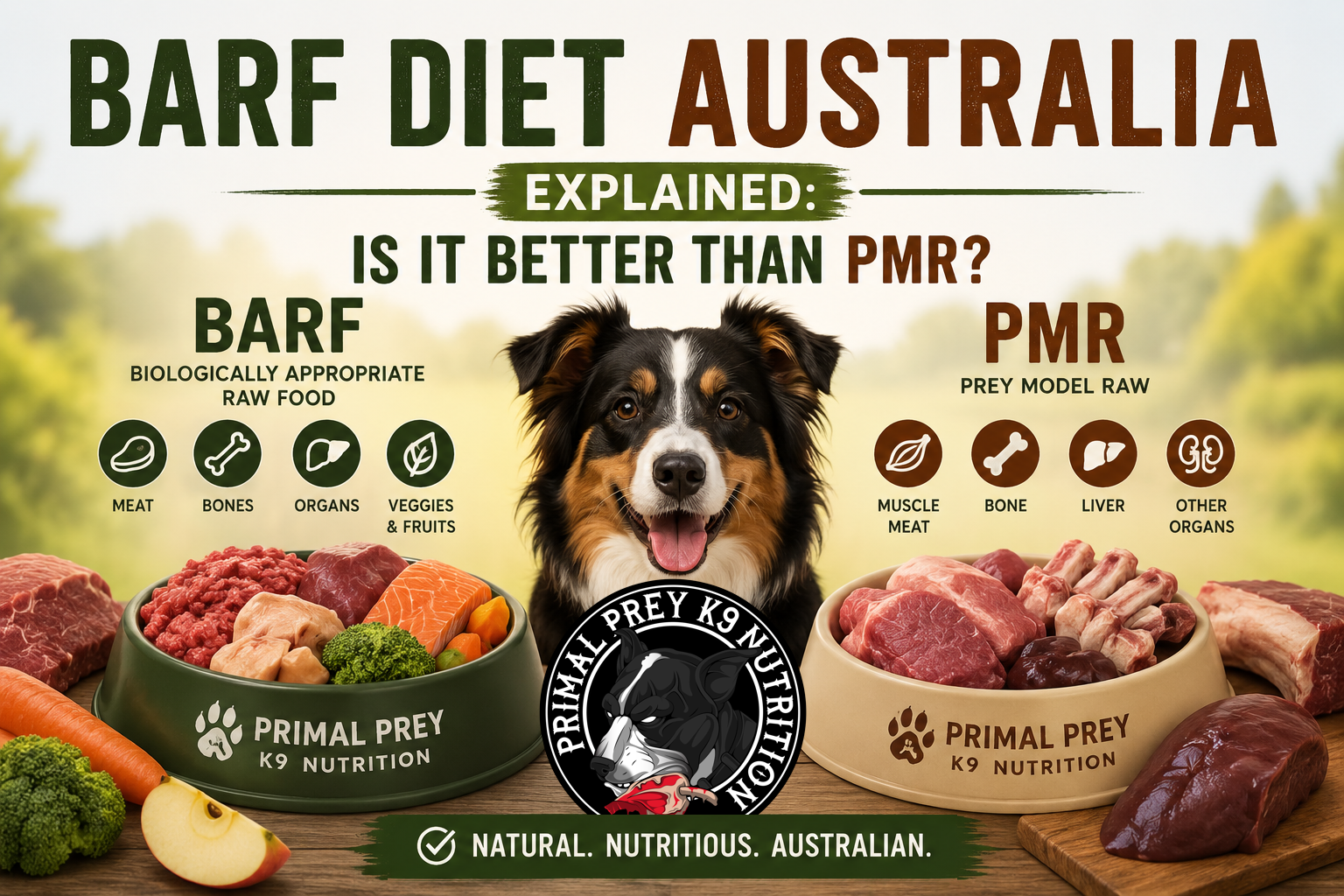
BARF stands for Biologically Appropriate Raw Food (sometimes referred to as Bones and Raw Food).
The BARF diet was developed to mimic what dogs would naturally eat while also recognising that modern dogs can benefit from carefully selected vegetables, fruits, and additional nutrients.
A typical BARF meal includes:
- Raw muscle meat
- Raw edible bones
- Organ meats
- Vegetables
- Fruits
- Eggs
- Fish
- Natural supplements
- Healthy oils
Unlike processed commercial foods, BARF meals avoid artificial preservatives, colours, fillers, and unnecessary carbohydrates.
What Does BARF Stand For?
The BARF philosophy focuses on providing a balanced diet using fresh ingredients.
Many Australian raw feeders appreciate BARF because it combines:
- High-quality animal protein
- Essential vitamins
- Natural minerals
- Fibre from vegetables
- Healthy fats
This creates a nutritionally complete meal while still maintaining the principles of natural feeding.
What Is the PMR Diet?
PMR stands for Prey Model Raw.
Rather than adding vegetables or supplements, PMR attempts to replicate the composition of an entire prey animal.
The standard PMR ratio is approximately:
- 80% muscle meat
- 10% edible bone
- 5% liver
- 5% other secreting organs
Some experienced feeders also include fur, feathers, tripe, fish, eggs, and whole prey animals.
The philosophy is simple:
If wolves and wild dogs evolved eating prey animals, then domestic dogs can thrive on the same nutritional balance.
BARF vs PMR: What’s the Difference?
Although both are raw feeding methods, they differ in several important ways.
| BARF Diet | PMR Diet |
|---|---|
| Includes vegetables | No vegetables |
| May include fruits | No fruits |
| Often uses supplements | Minimal supplementation |
| More flexible recipes | Strict prey ratios |
| Easier for beginners | Better suited for experienced raw feeders |
Both approaches eliminate processed kibble and prioritise fresh, species-appropriate foods.
Which Diet Is More Natural?
Many people assume PMR is the “most natural” because it closely mirrors a wild prey animal.
However, domestic dogs have evolved alongside humans for thousands of years. Research suggests they can digest certain plant materials more effectively than wolves.
That doesn’t necessarily make BARF less natural—it simply reflects the nutritional needs of today’s companion dogs.
Benefits of the BARF Diet
Many Australian dog owners choose BARF because it offers a balanced approach.
Common benefits include:
Better Digestion
Fresh ingredients are generally easier for dogs to digest than highly processed kibble.
Many owners notice:
- smaller stools
- reduced gas
- improved digestion
Improved Skin and Coat
Healthy fats from raw meat and fish help support:
- shinier coats
- healthier skin
- reduced itching
Better Dental Health
Raw meaty bones naturally help clean teeth while encouraging chewing.
This may reduce plaque build-up compared with soft commercial foods.
Increased Energy
Many owners report their dogs appear:
- more energetic
- leaner
- more active
after transitioning to raw feeding.
Greater Ingredient Control
With BARF, you know exactly what your dog is eating.
This is especially useful for dogs with:
- allergies
- sensitivities
- elimination diets
Benefits of the PMR Diet
PMR also offers numerous advantages.
Simple Feeding Philosophy
There’s no need to calculate vegetable portions or supplements.
Instead, meals follow prey ratios.
Highly Species Appropriate
Supporters believe PMR closely reflects what dogs evolved to eat.
Minimal Processing
PMR focuses almost entirely on fresh animal ingredients without plant matter.
Encourages Natural Chewing
Whole cuts of meat and raw bones provide enrichment while supporting dental health.
Is BARF More Balanced?
For many pet owners, BARF is easier to balance nutritionally.
By including:
- vegetables
- fruits
- oily fish
- eggs
- nutrient-rich extras
BARF recipes can provide additional vitamins and antioxidants that may complement raw meat.
However, balance depends on the quality of the recipe—not simply the feeding philosophy.
Which Diet Is Better for Australian Dogs?
The answer depends on your dog’s individual needs.
BARF may be better if your dog:
- is new to raw feeding
- benefits from additional fibre
- enjoys varied ingredients
- has a carefully formulated commercial raw diet
PMR may suit dogs whose owners:
- have experience with raw feeding
- understand nutritional balancing
- source a wide variety of meats and organs
- are comfortable preparing meals from scratch
What Does Primal Prey Recommend?
At Primal Prey K9 Nutrition, we believe dogs thrive on fresh, high-quality raw nutrition.
Our recipes are carefully formulated to provide:
- premium Australian meat
- nutrient-rich organs
- edible bone
- balanced nutrition
- convenient frozen raw meals
Whether you’re transitioning from kibble or already feeding raw, choosing complete and balanced meals makes feeding easier while helping ensure your dog receives consistent nutrition.
How to Transition from Kibble to Raw
If you’re new to raw feeding:
Week 1
Introduce small amounts of raw food alongside your dog’s current diet.
Week 2
Gradually increase raw food while reducing kibble.
Week 3
Most healthy adult dogs can transition fully to raw.
Always monitor:
- stool quality
- appetite
- energy levels
Dogs with medical conditions should transition under veterinary guidance.
Common Myths About BARF
Myth 1: Dogs Need Carbohydrates
Dogs have no nutritional requirement for high levels of carbohydrates.
Protein and healthy fats provide their primary energy source.
Myth 2: Raw Food Is Dangerous
When sourced from reputable Australian suppliers and handled correctly, raw food can be fed safely using proper hygiene and storage practices.
Myth 3: BARF Is Too Expensive
Many owners find improved health, better dental condition, and fewer digestive issues help offset feeding costs over time.
Frequently Asked Questions
Is BARF better than PMR?
Neither is universally better. BARF includes plant ingredients and often suits beginners, while PMR follows whole-prey ratios and may appeal to experienced raw feeders.
Can puppies eat BARF?
Yes, provided the diet is complete and balanced for growth. Puppies have different nutritional needs than adult dogs.
Does BARF include vegetables?
Yes. BARF commonly includes vegetables, fruits, and other nutrient-rich ingredients alongside raw meat and bones.
Is PMR easier?
Not necessarily. Although the ingredient list is simpler, balancing a PMR diet correctly requires knowledge of appropriate prey ratios and nutrient requirements.
Can I mix BARF and PMR?
Some experienced raw feeders combine principles from both approaches, but consistency and nutritional balance are important.
Final Thoughts
Both BARF and PMR aim to nourish dogs with fresh, species-appropriate foods instead of heavily processed diets. The best choice depends on your dog’s age, lifestyle, health status, and your confidence in preparing balanced meals.
For many Australian pet owners, a professionally prepared raw diet offers the convenience of complete nutrition without the guesswork. By choosing high-quality ingredients and following safe food handling practices, you can help support your dog’s long-term health, digestion, and overall wellbeing.